

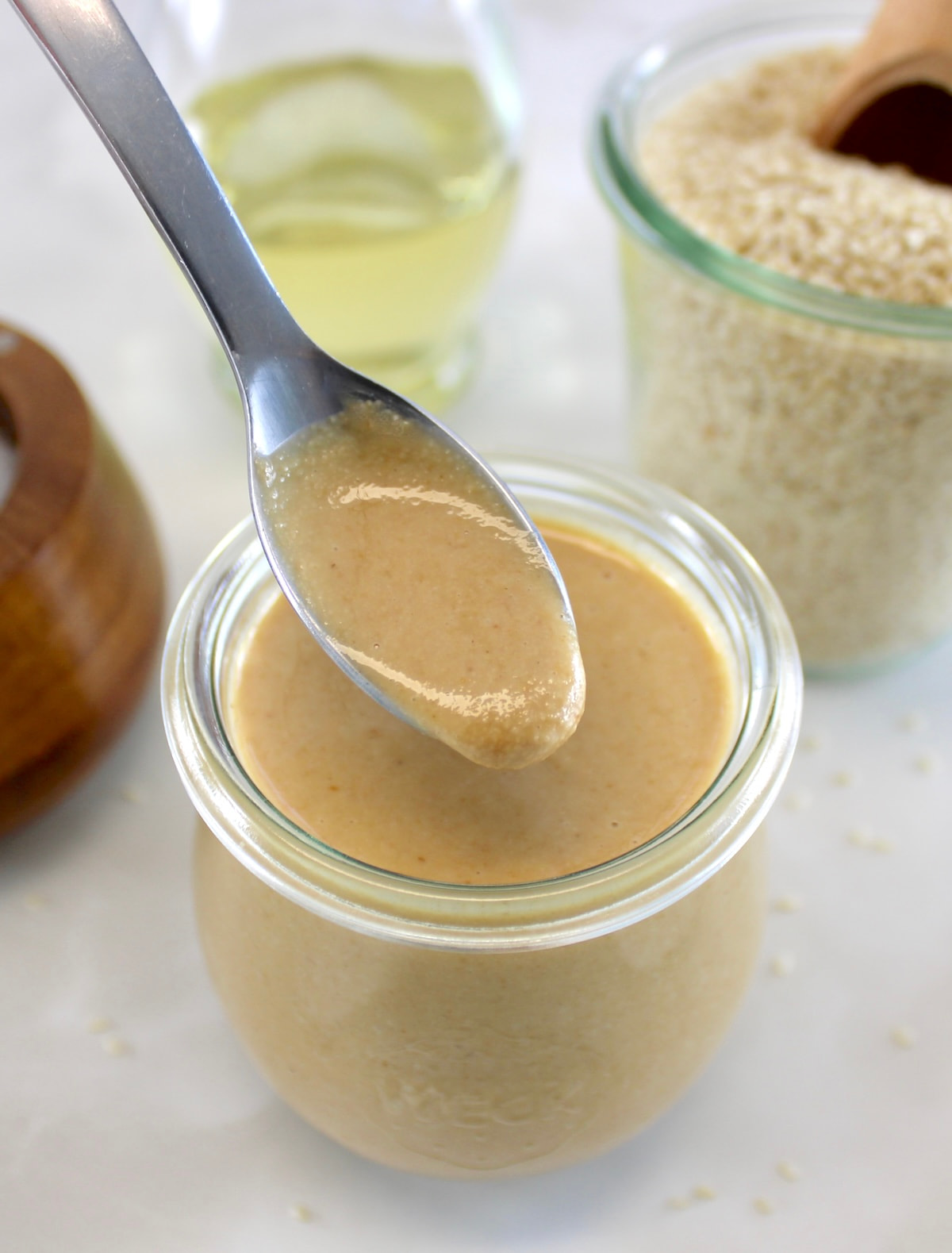
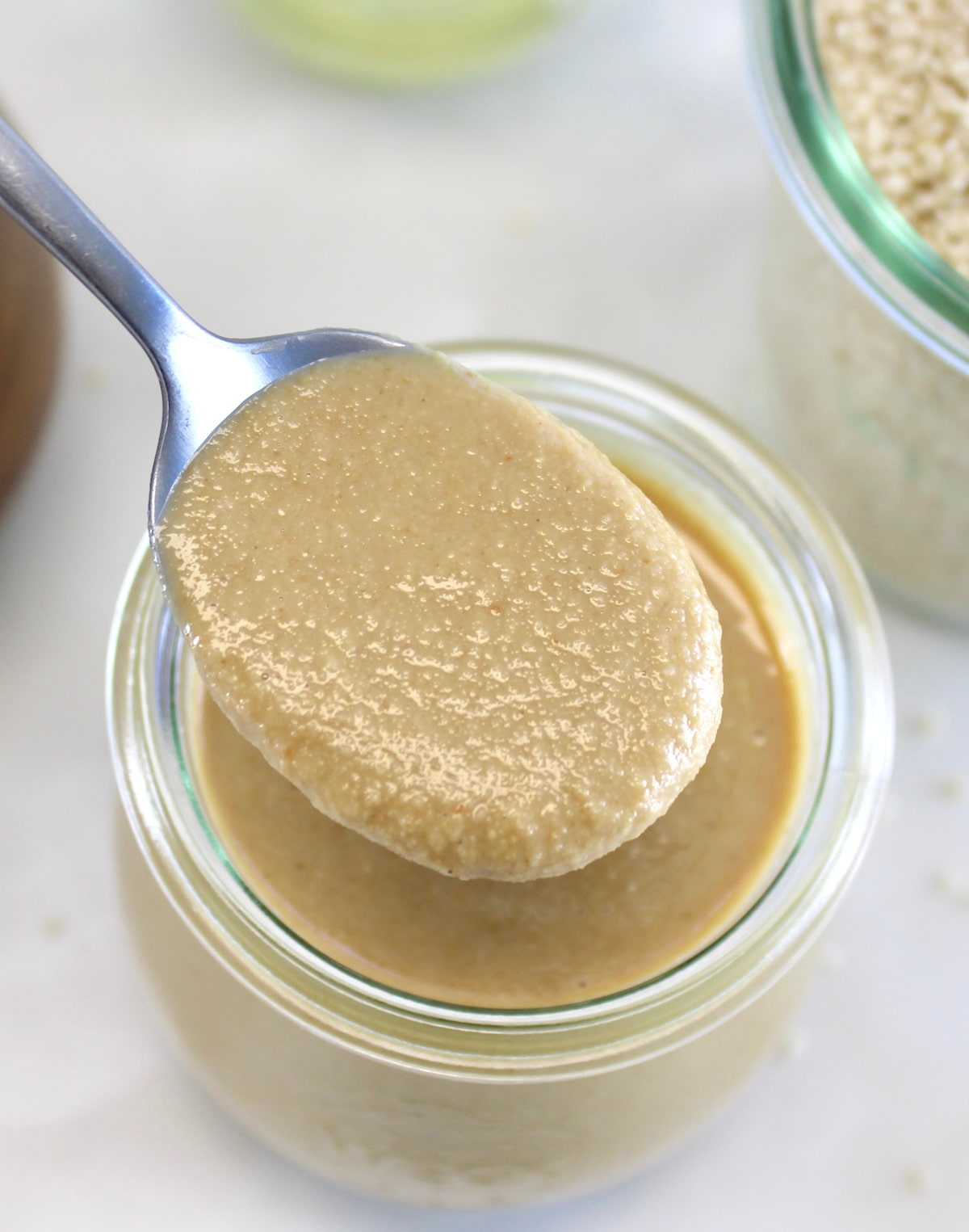
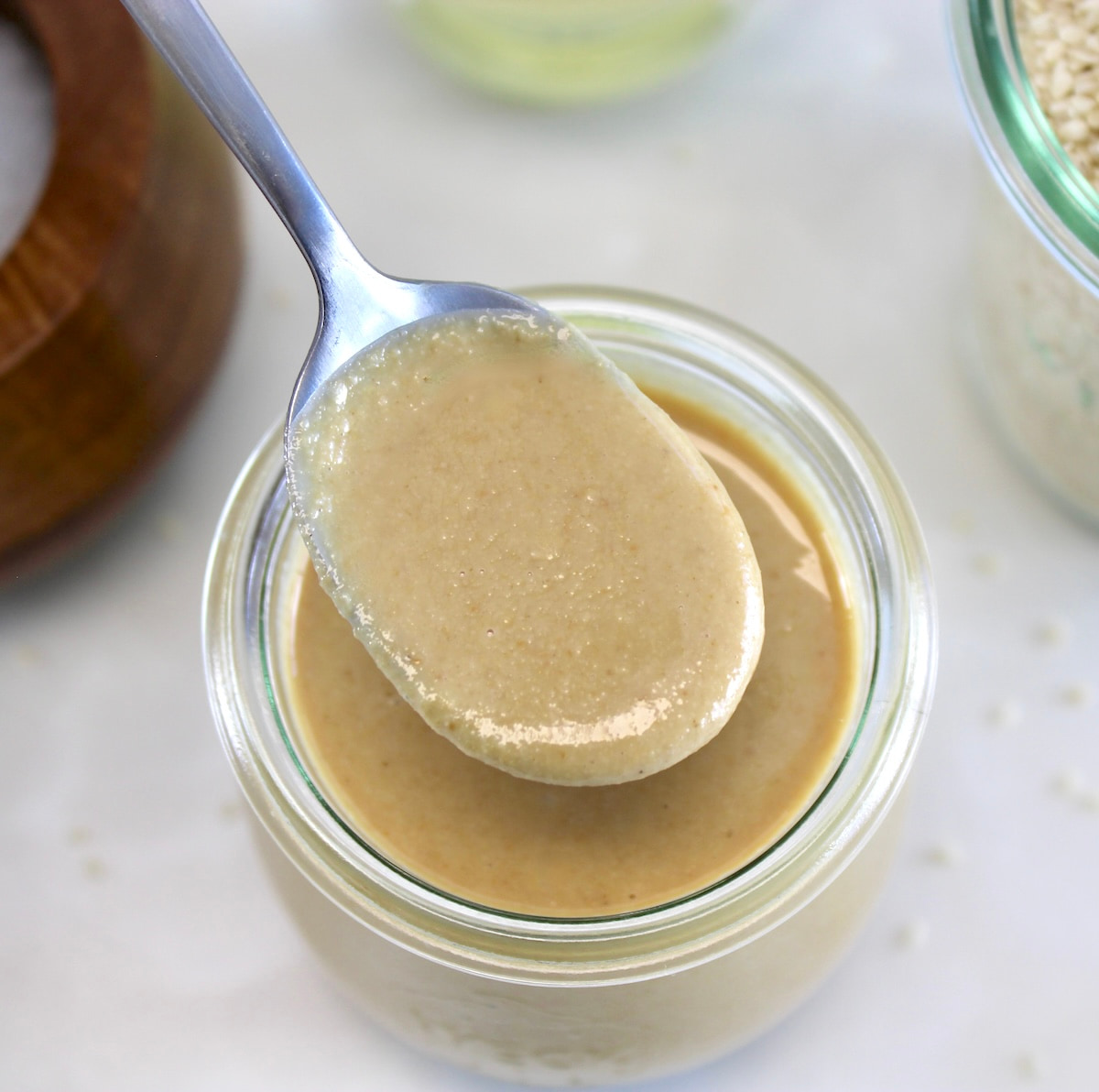
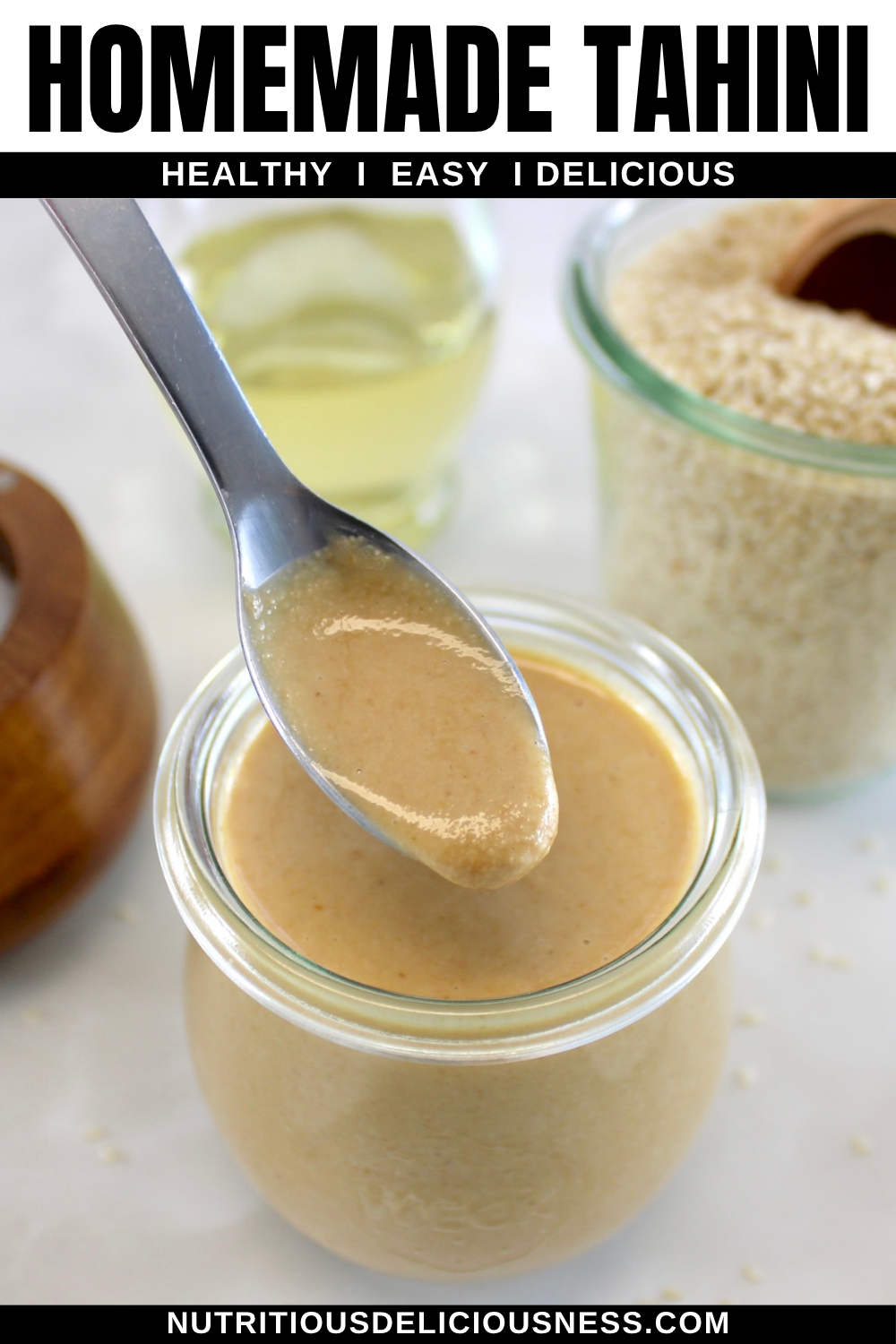
This Homemade Tahini comes together in about 15 minutes and is so easy to make yourself. It has a perfectly creamy texture and rich nutty flavor that tastes better than anything you can buy at the store. It’s great to use in homemade hummus, salad dressings, sauces and more!
10 EASY HEALTHY RECIPES EBOOK
Jump to:
- ❤️ Why You'll Love This Homemade Tahini Recipe
- 🛒 Ingredients for Homemade Tahini
- 🔪 How to Make Tahini at Home
- ☑️ Storage Instructions
- 💡 Tips for Making Tahini
- 🍴 Ways to Use Tahini
- Is it worth making your own tahini?
- How long will homemade tahini last?
- How do you tell if tahini has gone bad?
- Which sesame seeds are best for making tahini?
- Is tahini healthier than peanut butter?
- 🍽️ More Healthy Condiments
❤️ Why You'll Love This Homemade Tahini Recipe
- Rich nutty flavor
- Creamy texture
- Tastes better than store bought
- Quick and easy to make
- Low Carb, Vegan and Vegetarian friendly
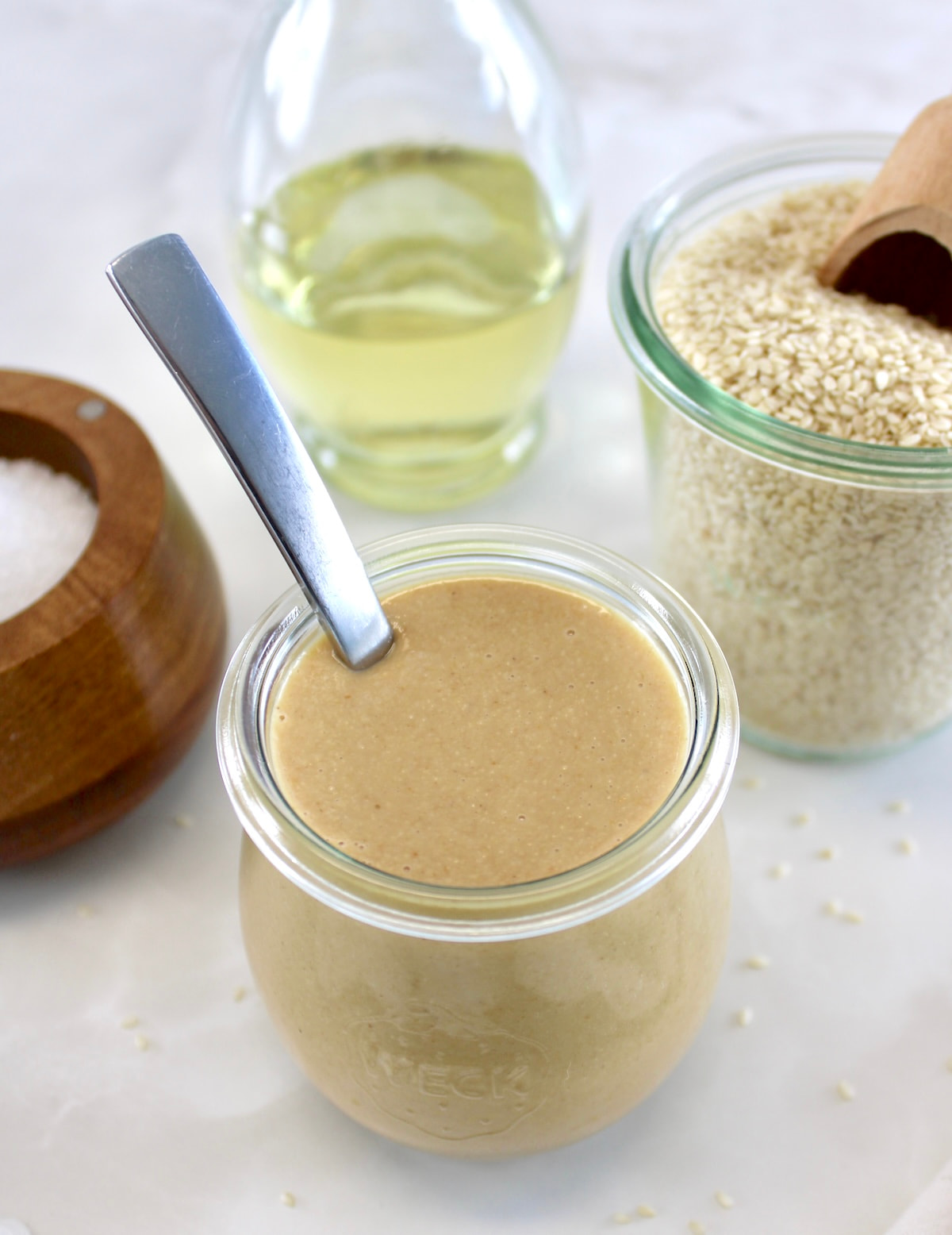
If you’ve ever enjoyed hummus before, then you are familiar with the star ingredient that gives it that classic flavor- tahini! For many years, I used store bought, and I’ll admit, in a pinch I still do, though I’m pretty picky with the brand I buy.
Recently I have experimented with making it myself from scratch and had tremendous results. I toast the sesame seeds first, which gives them a nutty flavor that is just amazing. Then blend up in my Ninja, though any high powered blender will work fine.
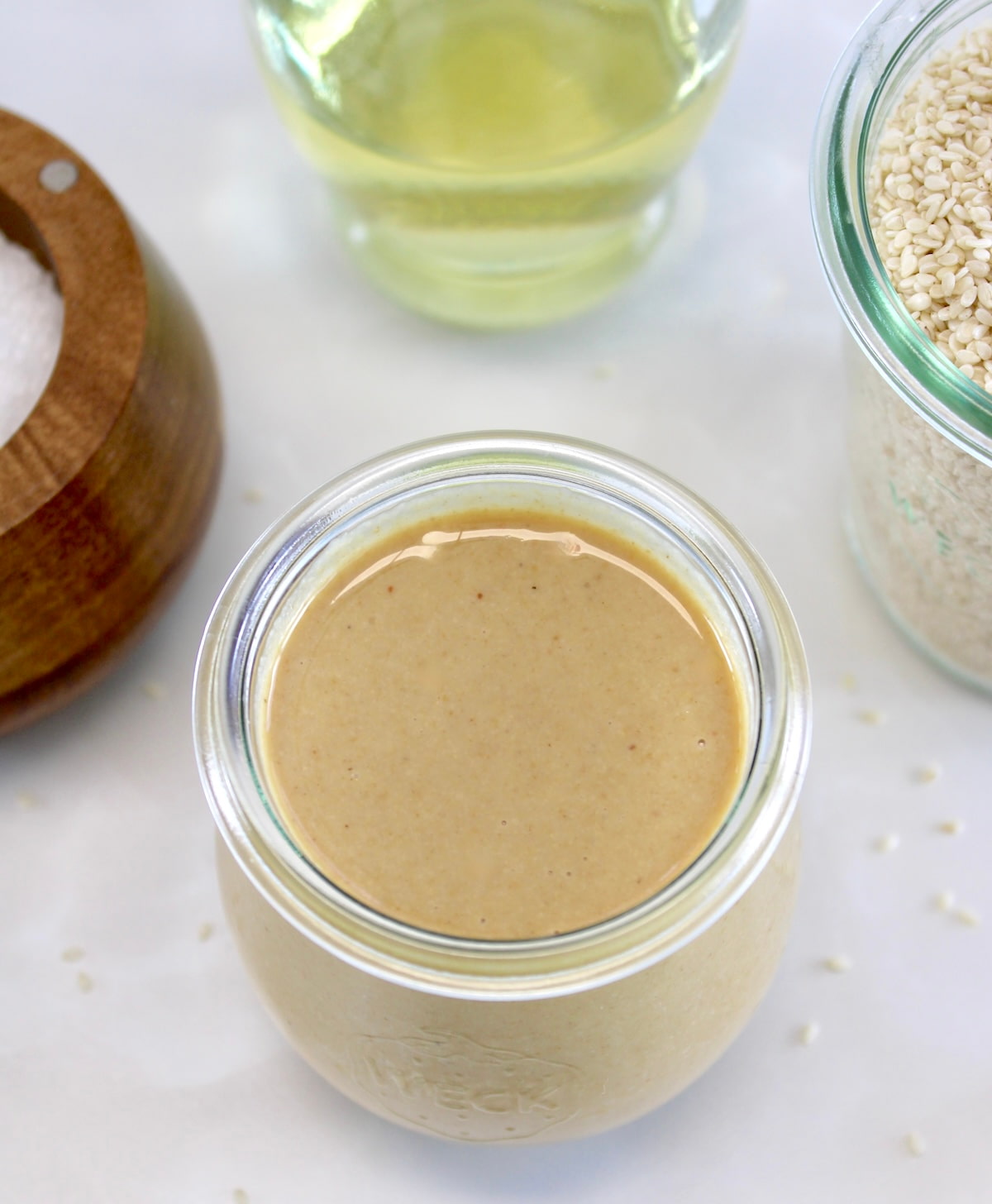
It’s so creamy and honestly tastes so much better than even my favorite store bought brand. And the best part? It keeps for 1-3 months in the fridge, so it will last you a while. It’s also freezer-friendly, so if you don’t use it all within that time, you can freeze leftovers.
🛒 Ingredients for Homemade Tahini
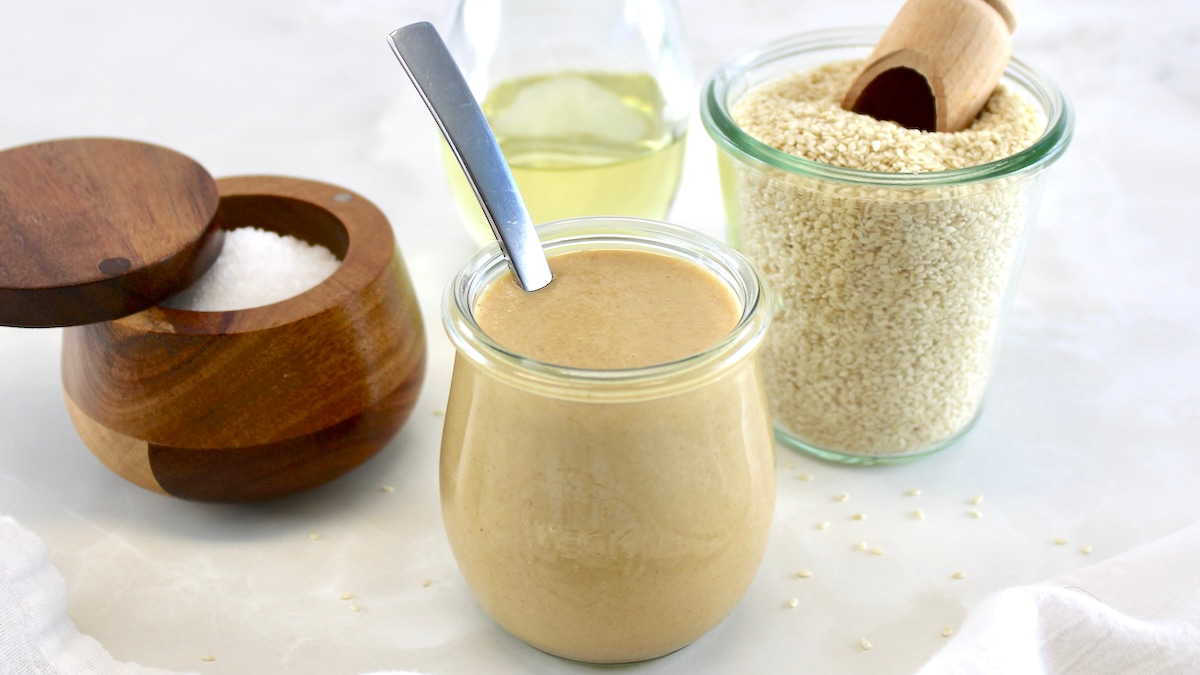
- Sesame seeds
- Avocado oil
- Salt
*Exact measurements are listed in the recipe card below.
🥣 Recommended Tools
🔪 How to Make Tahini at Home
Add the sesame seeds in a large dry skillet and heat to medium low.
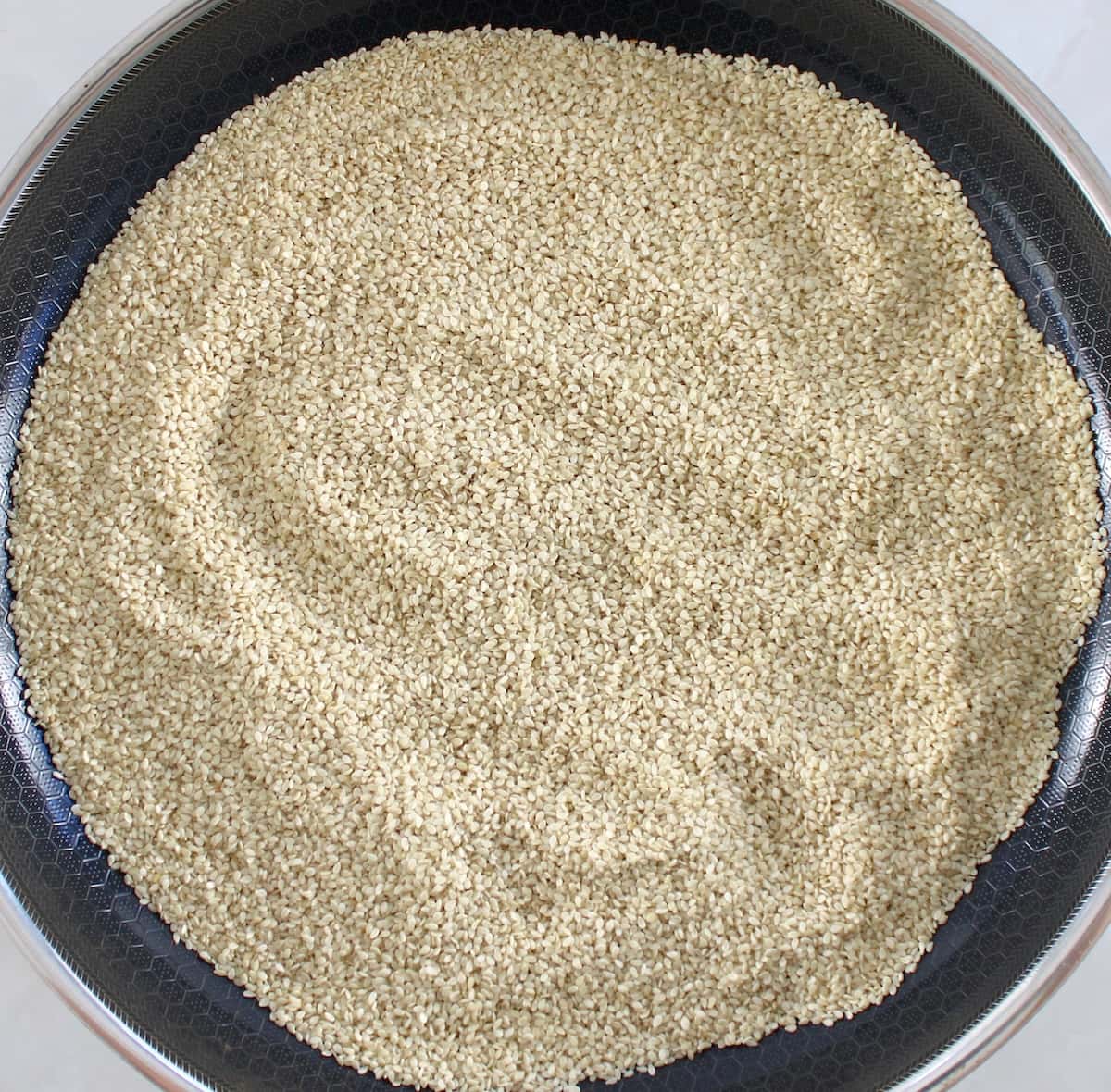
Allow them to toast for a few minutes, making sure to stir often.
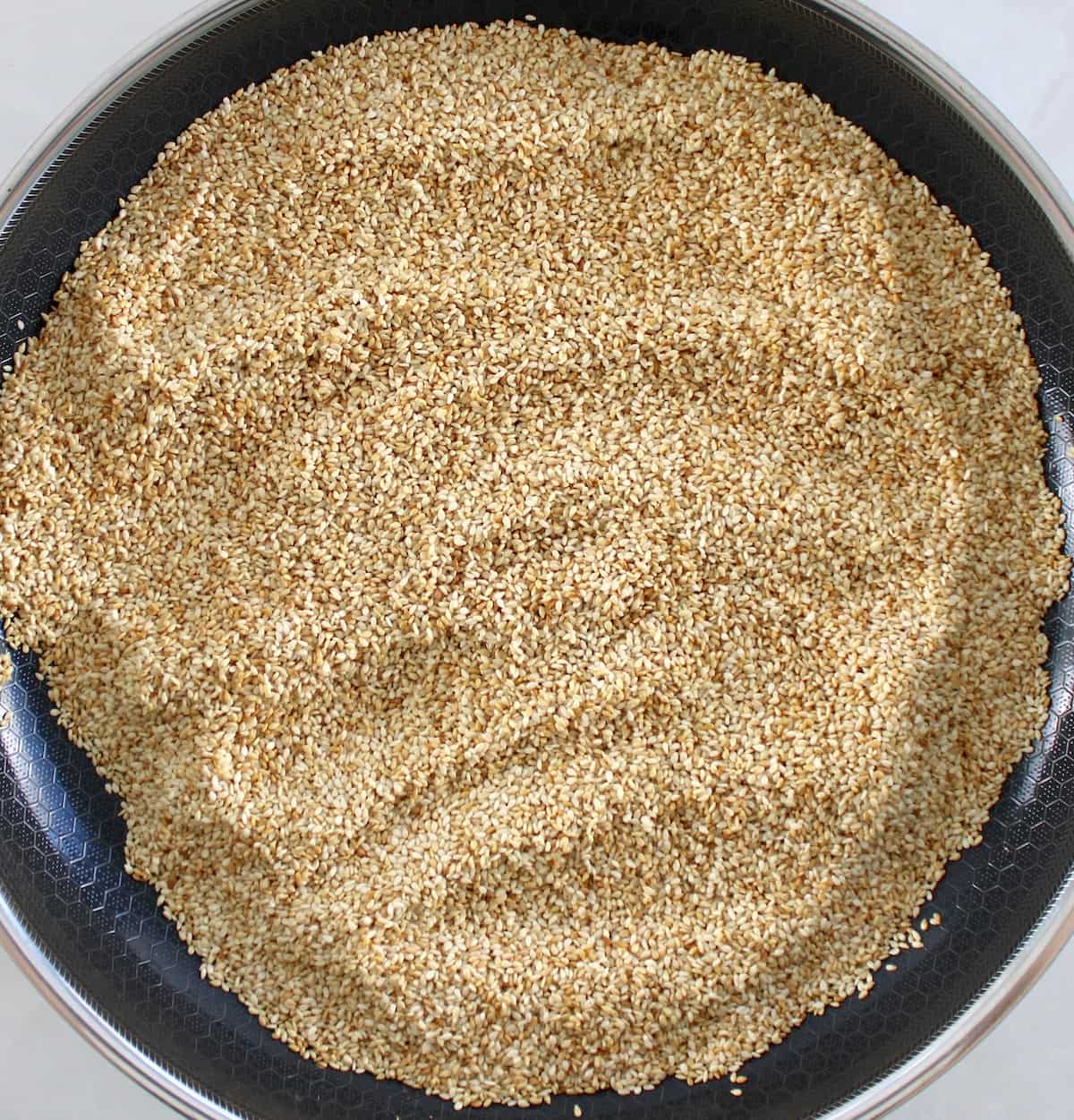
Let them cool slightly before transferring them to a high powered blender.
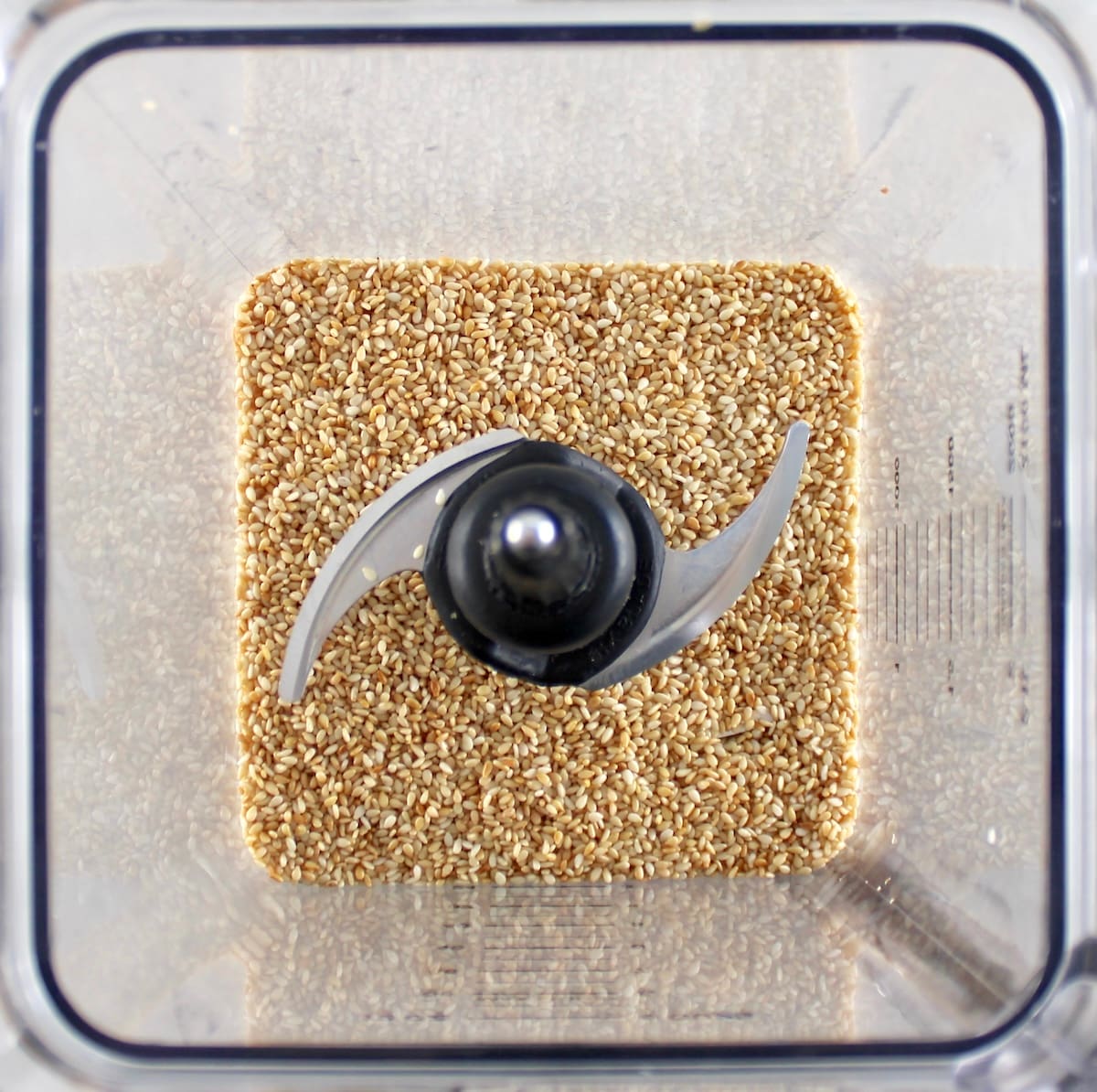
Blend for a few minutes until they become ground like flour.
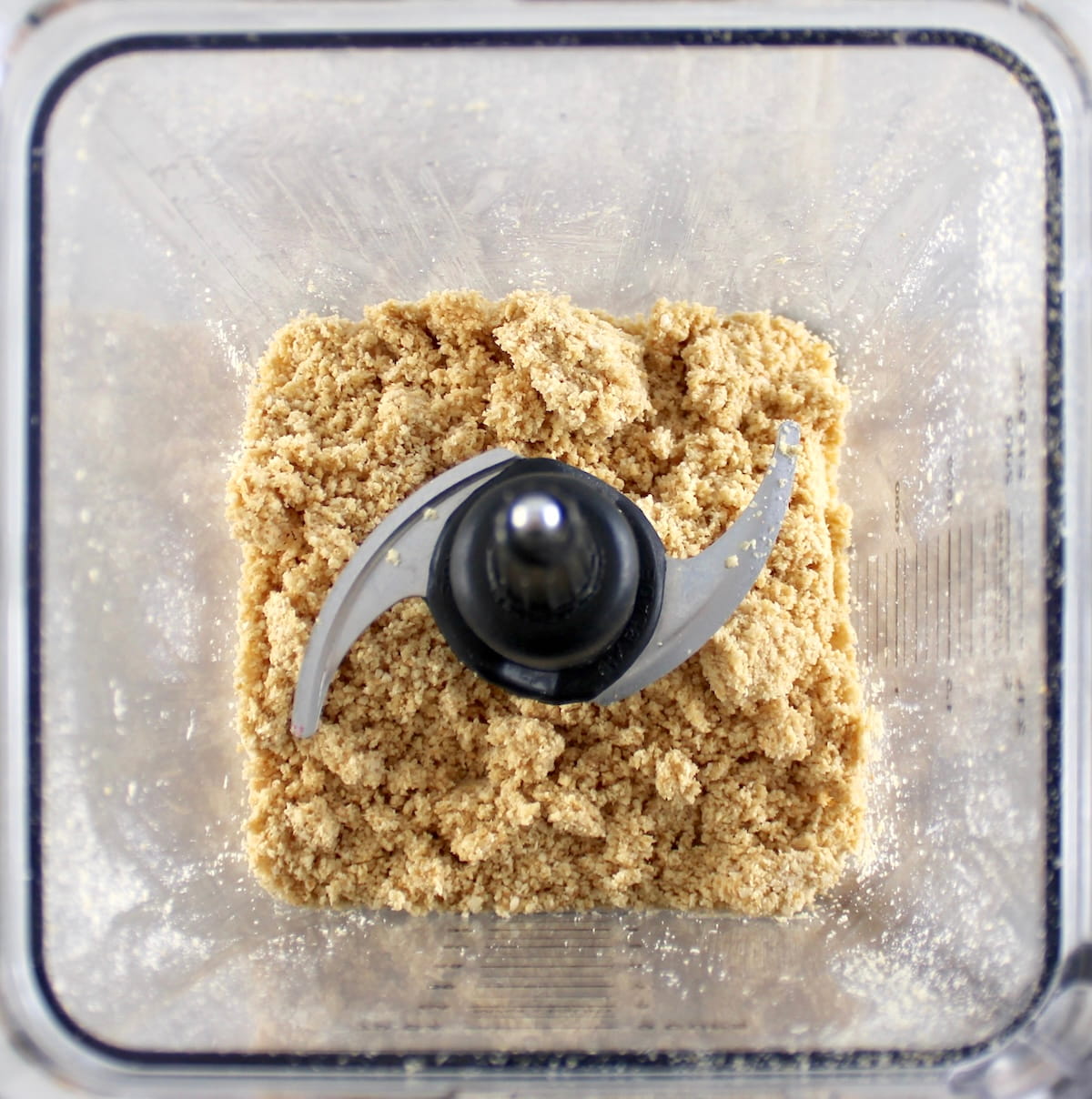
Scrape down the sides and continue mixing until they become like wet sand.
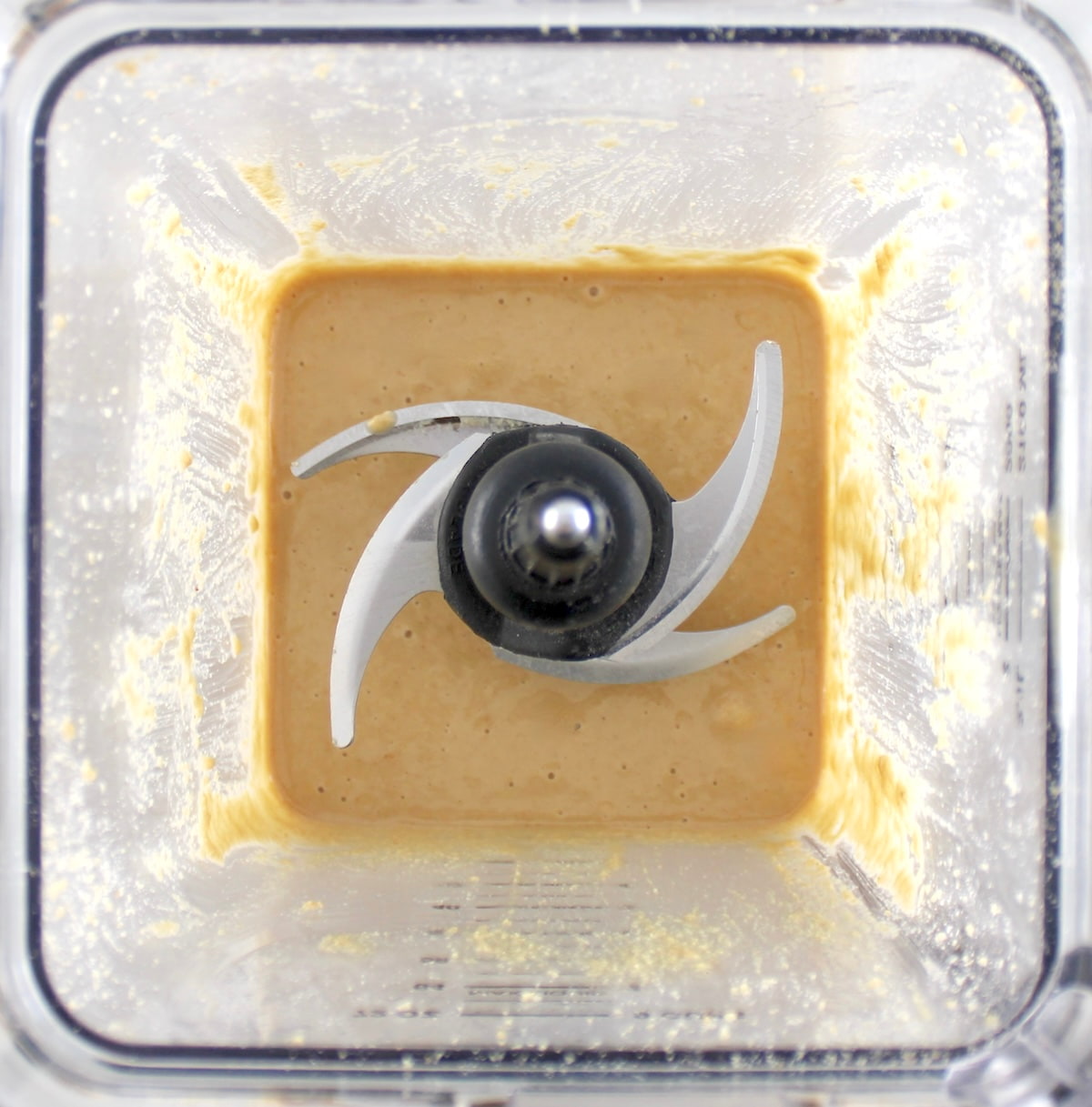
Pour in the salt and avocado oil, starting with 3 tablespoons, and continue blending until creamy. If they are still too thick, add in the remaining 1 tablespoon of avocado oil and keep blending.
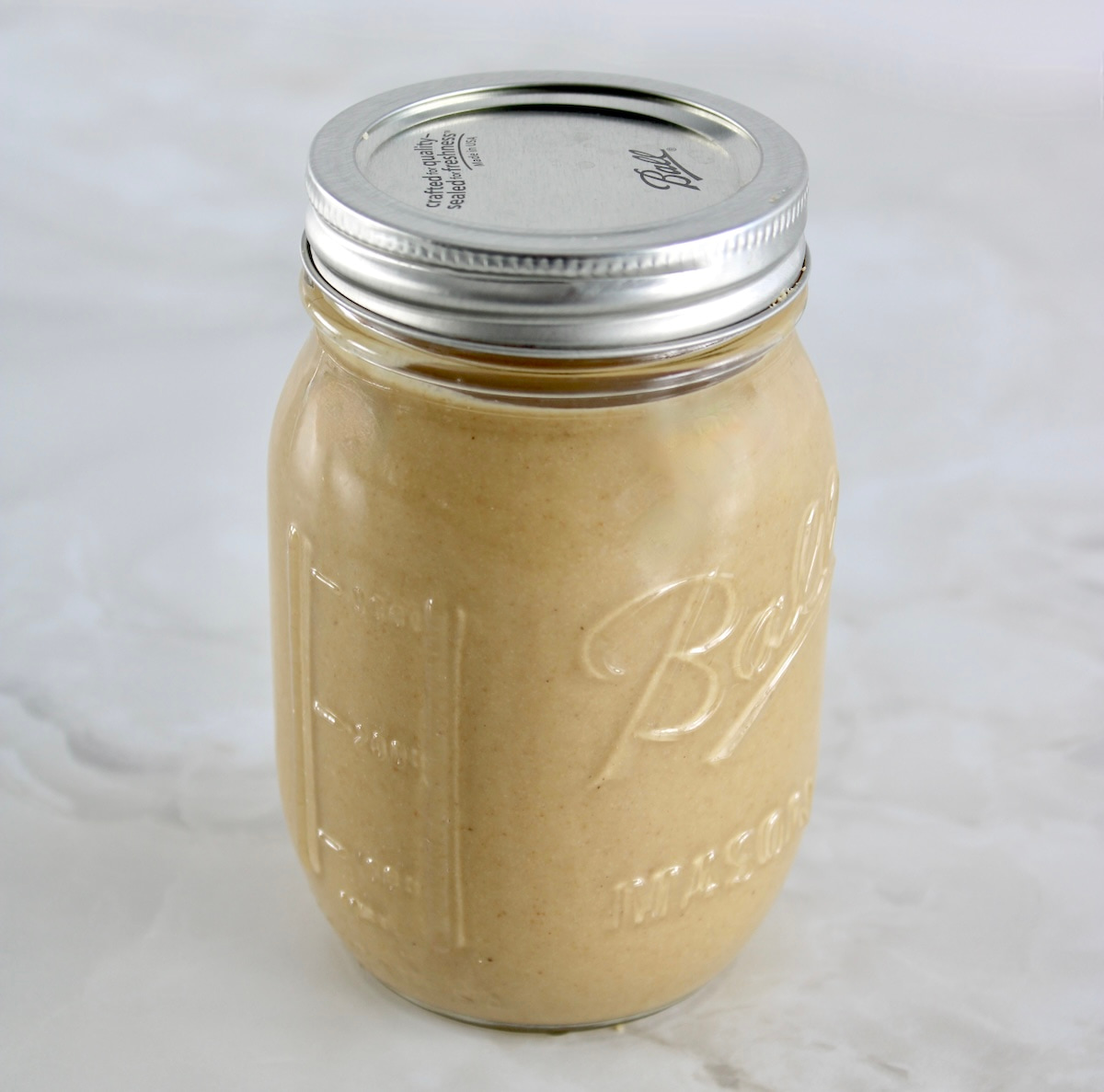
If you’ve ever made your own nut butter, you know the blending process can take several minutes, with scraping down the sides in between. Try to be patient, as it will come together and you’ll achieve the perfect texture.
This batch makes almost 2 cups and fills a standard pint jar, which is perfect for storage.
☑️ Storage Instructions
Store in the fridge in an airtight jar for 1-3 months or freeze.
💡 Tips for Making Tahini
- Have patience in blending, this process can take a while. If you happen to own a Vitamix, it will come together more quickly. If not, you can use any high powered blender and it will still work.
- Don’t toast the sesame seeds on medium-high or high heat, as they will quickly burn and will toast unevenly. It can be tempting to rush this part, but worth taking your time.
- Stir the sesame seeds often as they are toasting, they toast fairly quickly and you’ll want to prevent them from burning.
- If you don’t have avocado oil, you can use olive oil instead. I prefer the mild taste of avocado oil or even a light olive oil, as neither will overpower the flavor of the sesame seeds.
🍴 Ways to Use Tahini
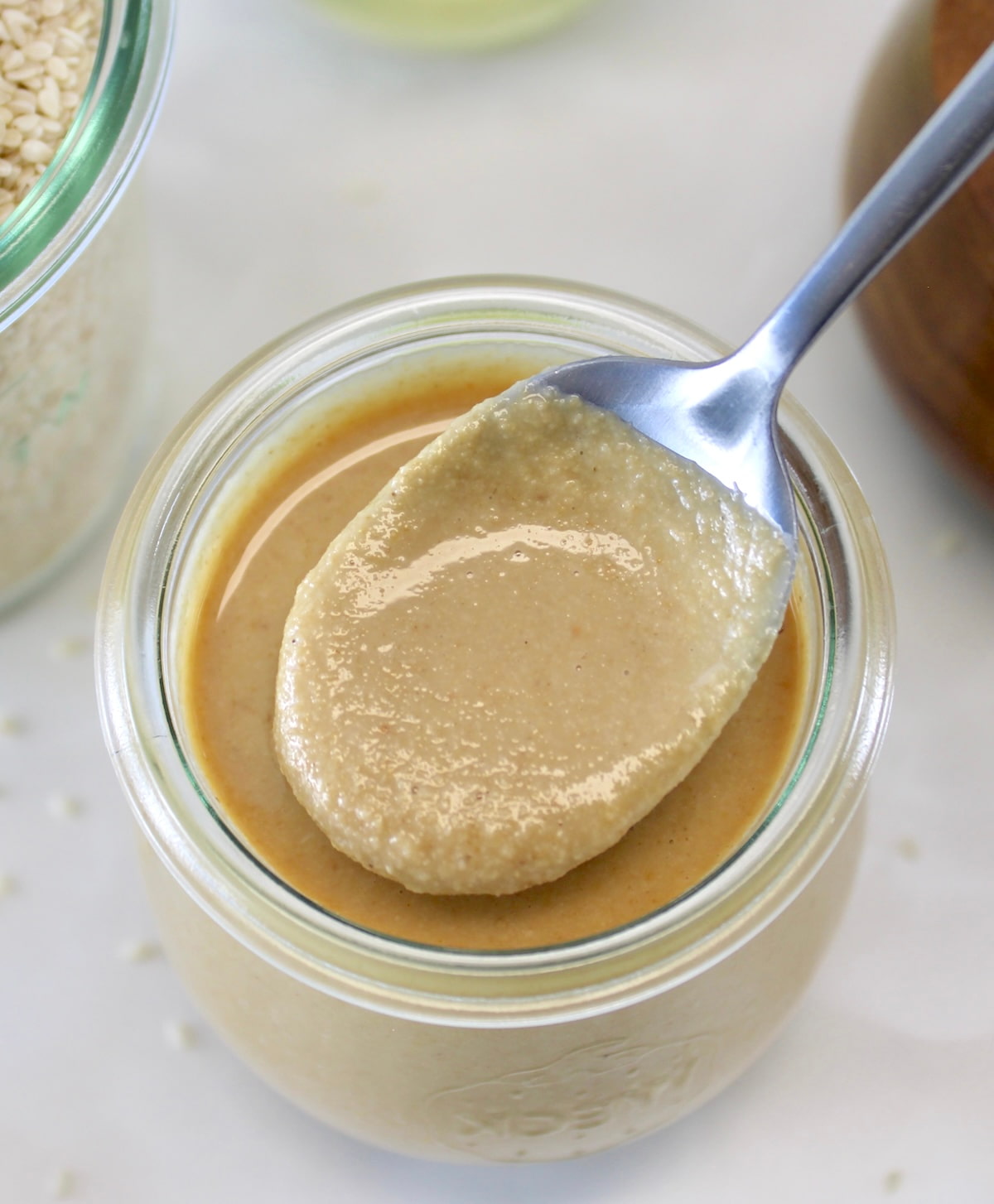
Tahini is most famous for using in hummus and nothing compares to making your own from scratch. Here are a few hummus recipes to try using this homemade tahini:
If you are watching your carbs and prefer not to use chickpeas, you can use cauliflower in these Roasted Garlic Cauliflower Hummus or this Roasted Pepper Cauliflower Hummus. Both have incredible flavor and are worth trying.
Tahini is also great to use in salad dressings, like this Lemon Tahini Dressing.
You can also smear some on your favorite wrap in place of mayonnaise, add to other dressings for adding creaminess, add to dips for a little toasty flavor and thickness.
Is it worth making your own tahini?
It is if you are really wanting the best and freshest flavor. You might save a little money on store bought, but I think you will find the difference in flavor outweighs the cost.
How long will homemade tahini last?
If stored properly in an airtight jar in the fridge, your tahini should last from 1-3 months.
How do you tell if tahini has gone bad?
It will likely have a slightly metallic flavor and a strange chemical-like smell. You might also start to see mold on the surface, and if you do, definitely toss it.
If you think you won't use your tahini within 2-3 months, it might be best to freeze some of the batch so there is no waste. It's easy enough to thaw and and use later.
Which sesame seeds are best for making tahini?
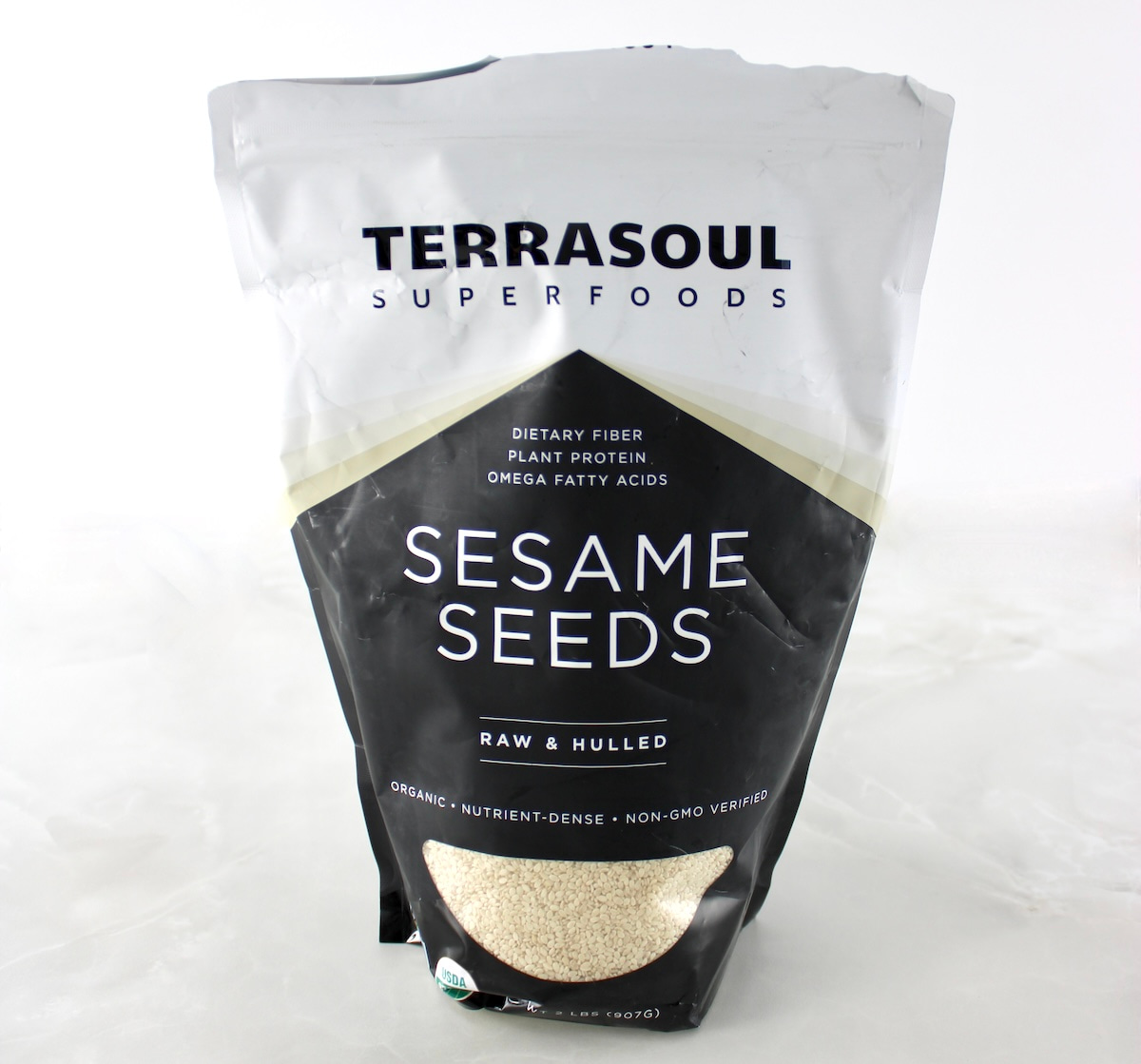
I use these raw and organic sesame seeds from Terrasoul Superfoods, which also happens to be one of my favorite brands for many other healthy products.
Is tahini healthier than peanut butter?
Both are actually healthy and loaded with nutrients. Peanut butter is higher in protein, while tahini is higher in calcium and fiber.
🍽️ More Healthy Condiments
Easy & Delicious Low Carb Recipes eBook
Homemade Tahini
Ingredients
- 3 cups raw sesame seeds
- 3-4 tablespoons avocado oil
- Pinch salt
Instructions
- Add the sesame seeds in a large dry skillet and heat to medium low. Allow them to toast for a few minutes, making sure to stir often.
- Let them cool slightly before transferring them to a high powered blender. Blend for a few minutes until they become ground like flour. Scrape down the sides and continue mixing until they become like wet sand.
- Pour in the salt and avocado oil, starting with 3 tablespoons, and continue blending until creamy. If they are still too thick, add in the remaining 1 tablespoon of avocado oil and keep blending.
- If you’ve ever made your own nut butter, you know the blending process can take several minutes, with scraping down the sides in between. Try to be patient, as it will come together and you’ll achieve the perfect texture.
Recipe Notes
*Make sure to scroll up and read the post for substitutions, additions and helpful tips for making this recipe.
*Nutritional data is provided as a courtesy and is accurate to the best of my knowledge. You can verify it using the nutrition calculator of your choice. All data is based on net carbs, without sugar alcohol: Swerve, Erythritol, Monk Fruit or Allulose.
© Copyright for Nutritious Deliciousness. Please use the share buttons to share on social media, but please do not copy/paste the recipe.
Leave a Comment or Review